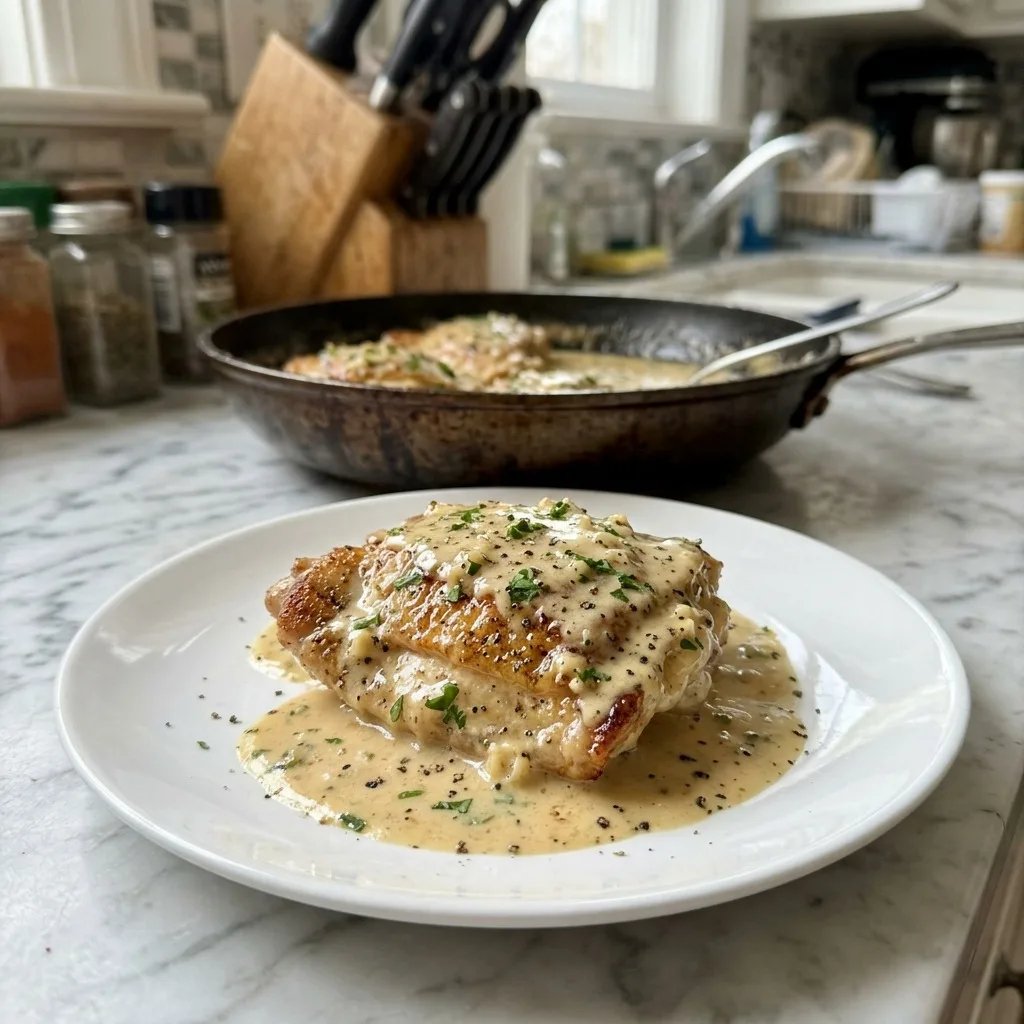
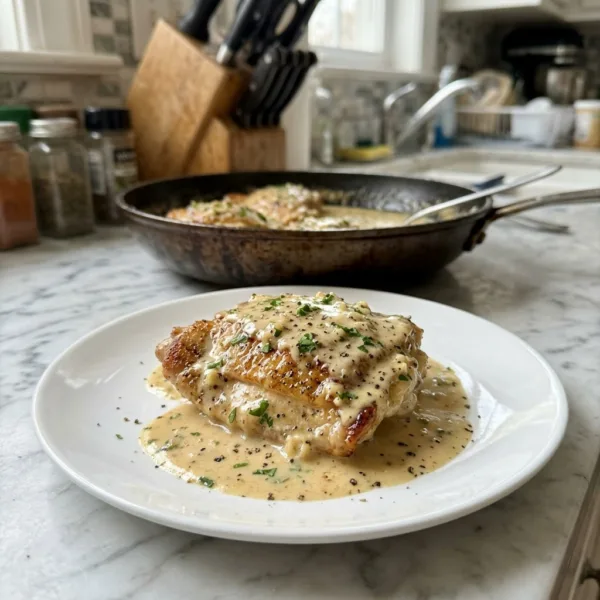
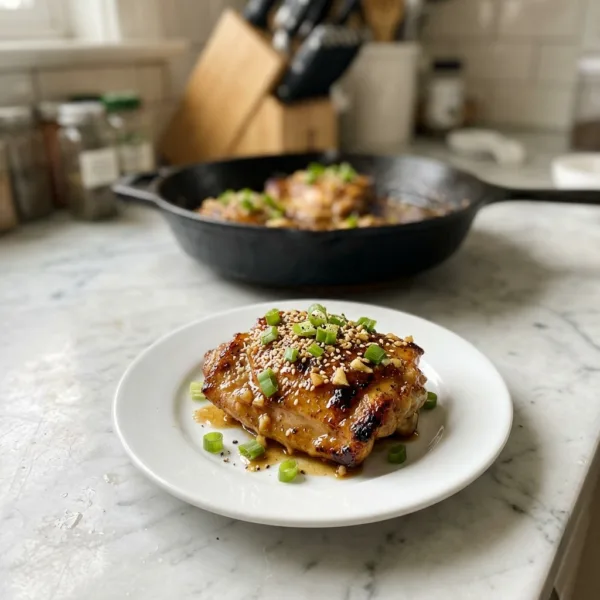
Golden seared chicken thighs in a rich, creamy garlic parmesan sauce, all made in one skillet in about 35 minutes.
Prep10 min
Cook25 min
Total35 min
Serves4
LevelEasy
What makes it special
Chicken thighs
Garlic
Parmesan
Cream
Some dinners earn a permanent spot in your weeknight rotation, and these garlic parmesan chicken thighs are one of them. The thighs are seared until deep golden, then finished in a rich, creamy sauce loaded with garlic and freshly grated parmesan. Everything happens in one skillet, it takes about thirty five minutes from start to finish, and it tastes like something you would order at a good restaurant.
The secret is simple. Chicken thighs stay juicy and forgiving, the browned bits left in the pan become the foundation of the sauce, and a handful of everyday ingredients turns into a silky, savory gravy that you will want to spoon over everything on your plate. If you are tired of dry chicken breasts, this recipe will change how you cook chicken.
Why you will love these garlic parmesan chicken thighs
Here is why this recipe is a favorite on busy evenings:
One skillet, one pan to wash. The chicken and the sauce cook in the same pan, so you keep every bit of flavor and make very little mess.
Juicy every time. Thighs have more fat and connective tissue than breasts, which keeps them moist and tender even if you cook them a minute too long.
A restaurant style sauce. Garlic, chicken broth, cream and parmesan simmer into a velvety sauce that clings to the chicken.
Short ingredient list. You need only a few ingredients, and most of them are already in your kitchen.
Ready in about 35 minutes. It is fast enough for a Tuesday and special enough for guests.
Great with almost any side. Pasta, rice, mashed potatoes, roasted vegetables or crusty bread all work beautifully.
What makes this recipe work?
Three simple steps give this dish its flavor. First, a hard sear on the thighs creates a deep golden crust. That crust is not just for looks, because the browned bits that stick to the pan, called fond, are packed with flavor. Second, garlic cooked briefly in the same pan perfumes the whole skillet. Third, broth and cream deglaze the pan, lifting up all those browned bits and turning them into a sauce, while parmesan thickens it and adds a salty, nutty depth.
Finishing the chicken in the sauce lets the thighs absorb the garlic and cheese, so the seasoning goes all the way through instead of sitting only on the surface.
Ingredient notes and smart substitutions
Because the ingredient list is short, the quality of each item shows. Here is what to look for.
Chicken thighs
Use boneless, skinless chicken thighs, about eight pieces or two pounds. Trim off any large pieces of fat, and pat the meat very dry with paper towels. Dry chicken sears better, because moisture on the surface steams the meat instead of browning it. If your thighs are very uneven in thickness, press the thick parts gently with the heel of your hand so they cook evenly.
Salt, pepper, Italian seasoning and paprika
This simple blend seasons the chicken itself. Italian seasoning adds a mix of herbs, and paprika adds a warm color and a hint of sweetness. If you do not have Italian seasoning, use a mix of dried oregano, basil and thyme.
Olive oil
Olive oil is the cooking fat for searing. A neutral oil such as avocado or canola also works if you prefer a higher smoke point. You can also use a tablespoon of butter along with the oil for extra flavor.
Fresh garlic
Five cloves of fresh garlic may sound like a lot, but remember that it is shared among eight thighs and a creamy sauce. Fresh garlic gives a sweeter and rounder flavor than jarred. Mince it finely, and add it to a pan that is not too hot, because burnt garlic turns bitter.
Chicken broth
The broth thins the sauce and helps lift the browned bits from the pan. Low sodium is the best choice, because the parmesan adds salt as well.
Heavy cream
Heavy cream gives the sauce its body and richness, and it resists curdling better than milk or half and half. If you want a lighter sauce, half and half works, though the sauce will be thinner and will need a minute or two longer to thicken.
Parmesan cheese
Grate your own parmesan from a wedge if you can. Pre-shredded cheese often contains anti-caking agents that make the sauce grainy. Fresh parmesan melts smoothly and gives a stronger, nuttier flavor.
Fresh parsley
Parsley adds color and a fresh, green taste that balances the richness. Basil is a good alternative.
Why thighs beat breasts for this recipe
Many home cooks reach for chicken breasts out of habit, but thighs are the better choice for a pan sauce like this one. Thigh meat is darker and contains more fat and collagen. During cooking, the collagen melts into gelatin, which keeps the meat silky and gives the sauce a naturally rich body. Breasts have almost no fat, so they go from juicy to dry in a minute or two. Thighs also cost less per pound, and they hold up to reheating much better, which makes them perfect for leftovers and meal prep.
How to build flavor in a pan sauce
The method used here works for dozens of other dishes, so it is worth learning. Start with a hot pan and dry protein to create browning. Remove the protein and cook aromatics such as garlic or shallots in the leftover fat. Add a liquid, like broth, wine or stock, to dissolve the browned bits. Reduce the liquid a little so the flavor concentrates. Finally, enrich it with cream, butter or cheese off a gentle heat. Once you understand these five stages, you can swap the ingredients to make a lemon caper sauce, a mushroom sauce or a mustard cream sauce with the same chicken.
A weeknight game plan
To get dinner on the table smoothly, start by taking the chicken out of the refrigerator and seasoning it while the pan heats. Grate the parmesan and mince the garlic while the first side sears. If you are serving pasta, put the water on to boil as soon as the chicken goes into the pan, so the noodles are ready when the sauce is finished. Set the table while the chicken simmers in the sauce. With this order, everything finishes together and nothing waits around getting cold.
Equipment you will need
You need a large skillet, twelve inches is ideal, so the thighs have room to sear without touching. A heavy bottomed pan such as stainless steel, cast iron or a thick nonstick skillet holds heat well. You will also need a pair of tongs, a microplane or box grater for the parmesan, a cutting board and a meat thermometer if you have one. A thermometer takes the guesswork out of knowing when the chicken is done.
How to make garlic parmesan chicken thighs, step by step
Read through the steps once before you begin, and measure your ingredients so everything is ready when the pan is hot.
Step 1: Season the chicken
Pat the chicken thighs completely dry with paper towels. Sprinkle both sides evenly with the salt, black pepper, Italian seasoning and paprika. Let the chicken sit for about ten minutes while you grate the cheese and mince the garlic. This short rest lets the seasoning start to soak in.
Step 2: Sear the chicken
Heat the olive oil in a large skillet over medium high heat until it shimmers. Add the thighs in a single layer, with space between them, and do not move them. Sear for five to six minutes on the first side until they have a deep golden crust and release easily from the pan. Flip and sear the second side for five to six minutes. The chicken does not need to be fully cooked, because it will finish in the sauce. Transfer the thighs to a plate.
Step 3: Cook the garlic
Lower the heat to medium. If the pan looks dry, add a teaspoon of oil. Add the minced garlic and stir for about thirty seconds, just until it smells fragrant. Do not let it brown.
Step 4: Deglaze with the broth
Pour in the chicken broth and scrape the bottom of the pan with a wooden spoon to release the browned bits. Simmer for two minutes, until the broth reduces slightly.
Step 5: Build the creamy sauce
Reduce the heat to medium low. Stir in the heavy cream and the grated parmesan. Simmer gently, stirring often, for three to four minutes, until the sauce thickens enough to coat the back of a spoon. Never let it boil hard, because high heat can make a cream sauce split.
Step 6: Finish the chicken in the sauce
Return the thighs and any juices from the plate to the skillet. Spoon sauce over the top. Simmer gently for five to six minutes, turning once, until the thickest part of each thigh reaches 175 degrees F (80 degrees C). Thighs are best at a slightly higher temperature than breasts, because that is when the connective tissue turns tender.
Step 7: Serve
Sprinkle with the chopped parsley and a little extra parmesan, and serve right away, spooning plenty of sauce over each thigh.
Timing guide
Prep and seasoning: 10 minutes
Searing the chicken: 10 to 12 minutes
Making the sauce: 6 to 8 minutes
Finishing in the sauce: 5 to 6 minutes
Total: about 35 minutes
How to fix common problems
The sauce is too thin. Simmer it for a few more minutes without the lid, or whisk one teaspoon of cornstarch with a tablespoon of cold water and stir it in. Simmer for one minute.
The sauce is too thick. Add a splash of chicken broth or cream until it loosens.
The sauce looks grainy or split. The heat was too high or the cheese was pre-shredded. Remove the pan from the heat and whisk in a spoonful of warm cream. Next time, keep the heat low and grate fresh parmesan.
The chicken is tough. It may have been overcooked. Remove it from the heat as soon as it reaches 175 degrees F.
The chicken did not brown. The pan was not hot enough, the chicken was wet or the pan was crowded. Dry the meat well and cook in two batches if needed.
The garlic tastes bitter. It burned. Add it only once the heat is lowered, and stir constantly.
Tips for the best garlic parmesan chicken thighs
Do not move the chicken while it sears. Leaving it alone is how you build the crust that flavors the whole sauce.
Use a big enough pan. Crowding makes the chicken steam instead of brown.
Pound uneven thighs. Even thickness means even cooking.
Grate the cheese fresh. It melts smoothly and tastes much better.
Keep the sauce at a gentle simmer. High heat is the number one cause of split cream sauces.
Rest the chicken briefly. Let it sit in the sauce for two minutes off the heat so the juices settle.
Use a thermometer. It is the easiest way to avoid overcooked chicken.
Variations to try
Add spinach. Stir in two big handfuls of baby spinach at the end and let it wilt into the sauce.
Add sun-dried tomatoes. A quarter cup of chopped sun-dried tomatoes adds sweetness and tang.
Add mushrooms. Sauté sliced mushrooms in the pan before the garlic for an earthy, savory twist.
Make it spicy. A pinch of red pepper flakes in the sauce gives a gentle warmth.
Add lemon. A squeeze of fresh lemon juice at the end brightens the whole dish.
Use bone-in thighs. Sear them skin side down for eight minutes, flip and simmer in the sauce for twenty to twenty five minutes until they reach 175 degrees F.
Use chicken breasts. Slice them into thin cutlets, cook for four to five minutes per side and simmer in the sauce for only two minutes.
Bake it. Sear the thighs, pour the sauce over them and finish them in a 375 degree F oven for fifteen to twenty minutes.
What to serve with garlic parmesan chicken thighs
The creamy sauce begs for something to soak it up. Buttered egg noodles, linguine or penne make a classic pairing, and the sauce clings to the pasta beautifully. Steamed white rice, creamy mashed potatoes or roasted baby potatoes also work well. For a lighter meal, serve the chicken with cauliflower rice or zucchini noodles.
Add a vegetable for color and balance. Roasted broccoli, steamed green beans, sautéed asparagus or a simple green salad with a lemony dressing all go well. A basket of warm garlic bread or crusty baguette is perfect for wiping the plate clean.
Storing and reheating leftovers
Let the chicken cool, then place it with its sauce in an airtight container. It keeps in the refrigerator for up to three days. To reheat, warm it gently in a skillet over low heat with a splash of chicken broth or cream, which loosens the sauce as it warms. You can also use the microwave at fifty percent power in short bursts, stirring in between, so the sauce does not separate.
You can freeze the chicken in its sauce for up to two months. Thaw it overnight in the refrigerator and reheat it slowly. The sauce may look slightly thinner after thawing, and a gentle whisk brings it back together.
Make ahead and meal prep tips
You can season the chicken up to a day ahead and keep it covered in the refrigerator, which adds even more flavor. You can also grate the cheese and mince the garlic in the morning. For a meal prep lunch, portion the chicken and sauce over rice and steamed broccoli in containers, and reheat them at work with a splash of water.
Common mistakes to avoid
Using wet chicken. It will steam instead of sear.
Crowding the pan. Chicken that touches will not brown.
Boiling the cream. A hard boil makes the sauce split.
Using pre-shredded cheese. It can leave the sauce grainy.
Burning the garlic. Keep the heat moderate and stir.
Skipping the thermometer. Guessing leads to dry or underdone chicken.
Over-salting. Parmesan and broth both add salt, so taste before adding more.
A note on nutrition
One serving of two thighs with sauce has about 470 calories, 40 grams of protein and only about 3 grams of carbohydrates, which makes it a good fit for low carb eating. It is a rich dish, so a side of vegetables helps balance the meal. Values are estimates and vary with the brands you use.
Frequently asked questions
Can I use half and half instead of heavy cream?
Yes, but the sauce will be thinner. Simmer it a little longer, or add a teaspoon of cornstarch mixed with cold water.
Can I make this dairy free?
Use full fat coconut cream and a dairy free parmesan style cheese. The flavor will be slightly different, but the sauce will still be creamy.
Can I use frozen chicken thighs?
Thaw them fully first, in the refrigerator overnight, and pat them very dry before searing.
What internal temperature should the thighs reach?
Chicken is safe at 165 degrees F (74 degrees C), but thighs taste best and become most tender at 175 degrees F (80 degrees C).
Can I bake instead of simmer?
Yes. After searing, return the chicken to the skillet with the sauce, and bake it uncovered at 375 degrees F for fifteen to twenty minutes.
Why did my sauce separate?
The heat was probably too high. Take the pan off the heat and whisk in a spoonful of warm cream to bring it back together.
Can I use dried garlic?
Fresh garlic gives the best flavor. If you must use dried, use one teaspoon of garlic powder, added with the seasoning on the chicken.
Can I double the recipe?
Yes, but sear the chicken in batches, and use a very large skillet or a Dutch oven for the sauce.
What wine can I add?
A splash of dry white wine, about a quarter cup, can replace part of the broth. Simmer it for a minute before adding the cream.
Can I cook this in a slow cooker?
You can. Sear the thighs, place them in the slow cooker with the sauce ingredients and cook on low for four hours, then stir in the cheese at the end.
These garlic parmesan chicken thighs are proof that a short ingredient list and a good technique can make a truly memorable dinner. Sear them well, keep the sauce gentle, and serve with something to soak up every last drop. I hope it becomes a regular at your table.
Juicy garlic parmesan chicken thighs seared golden in a creamy garlic parmesan sauce. One skillet, ready in 35 minutes, serves 4.
Chicken Easy American
Prep
10 min
Cook
25 min
Total
35 min
Servings
4
Ingredients 11 items
Tap to check off as you go
For the chicken
For the sauce
Instructions 7 steps
1
Season the chicken
Pat the thighs dry and season both sides with the salt, pepper, Italian seasoning and paprika.
2
Sear
Heat the olive oil in a large skillet over medium high heat and sear the thighs 5 to 6 minutes per side until deep golden. Move to a plate.
3
Cook the garlic
Lower the heat to medium, add the garlic to the same skillet and cook 30 seconds until fragrant.
4
Add the broth
Pour in the chicken broth, scrape up the browned bits and simmer 2 minutes.
5
Make the sauce
Stir in the cream and parmesan and simmer gently 3 to 4 minutes until the sauce coats a spoon.
6
Finish in the sauce
Return the chicken and its juices to the skillet and simmer 5 to 6 minutes, until the thighs reach 175 F (80 C).
7
Serve
Sprinkle with parsley and extra parmesan and serve right away.
Nutrition per serving
Calories
470
Protein
40g
Carbs
3g
Fat
33g
Sugar
1g
Fiber
0g
Sodium
880mg
Questions, answered
Can I use chicken breasts?
Yes. Use thin cutlets and cook them 4 to 5 minutes per side, then simmer in the sauce only 2 minutes.
Can I use bone-in thighs?
Yes. Sear them skin side down 8 minutes, flip, and simmer in the sauce 20 to 25 minutes until they reach 175 F.
What should I serve with it?
It is great over pasta, rice or mashed potatoes, or with roasted broccoli and crusty bread.
How do I store leftovers?
Keep in an airtight container in the fridge up to 3 days and reheat gently with a splash of broth.
Recipe by
Denise
Home cook, baker and serial recipe tweaker. I share the dishes my family asks for most, written step by step so they turn out right in your kitchen too.