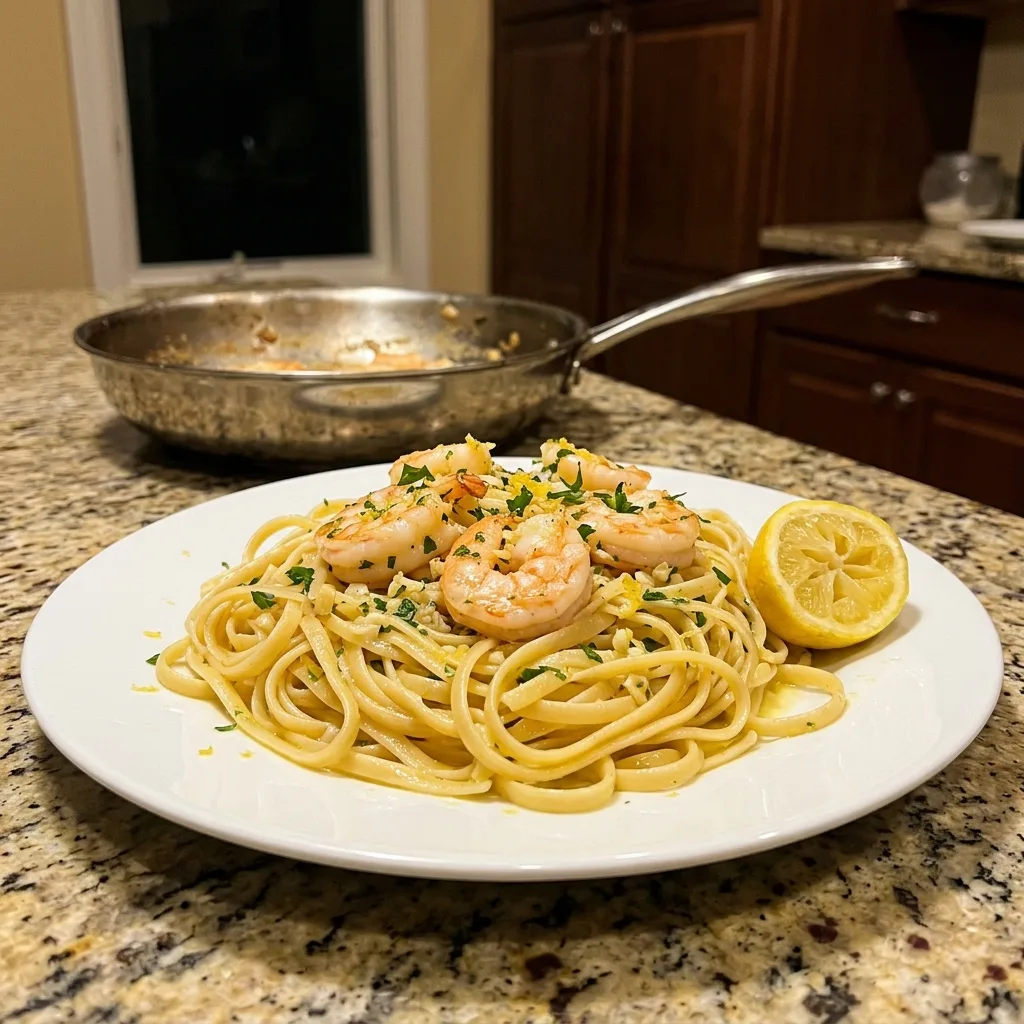
Tender garlic shrimp tossed with linguine in a silky lemon butter sauce, finished with parmesan and fresh parsley in about 30 minutes.
Prep10 min
Cook20 min
Total30 min
Serves4
LevelEasy
What makes it special
Shrimp
Lemon
Linguine
Garlic
Some nights call for a dinner that feels like a treat but does not take all evening, and lemon garlic butter shrimp linguine is exactly that. Plump shrimp are seared until pink and sweet, then tossed with tender linguine in a silky sauce made from butter, garlic, white wine, lemon and parmesan. It tastes like something from a seaside restaurant, yet the whole pot comes together in about thirty minutes with one skillet and one pasta pot.
The secret is the pan sauce. Instead of making a heavy cream sauce, this recipe builds flavor from browned bits, butter and a little starchy pasta water. The water brings everything together into a glossy coating that clings to every strand, while the lemon keeps the dish light and bright. If you have been looking for a reliable shrimp pasta that works for a busy weeknight and still impresses guests, this is the one to bookmark.
Why you will love this lemon garlic butter shrimp linguine
This recipe has a lot going for it. Here are the reasons it keeps showing up on our table:
It is fast. From the first pot of water to the first forkful, it takes about thirty minutes, and most of that is waiting for the pasta.
It tastes fancy. Garlic, lemon and butter are a classic trio, and together they make the dish feel special without any complicated technique.
The shrimp stay tender. Searing them quickly and finishing them in the warm sauce means they never turn rubbery.
No cream needed. The sauce gets its body from butter, parmesan and pasta water, so it feels rich but not heavy.
It uses simple ingredients. Everything comes from the grocery store, and frozen shrimp work beautifully.
It is easy to adjust. You can turn up the heat, swap the pasta or add vegetables without changing the method.
What is shrimp scampi pasta?
Shrimp scampi is a classic Italian American dish of shrimp cooked in garlic, butter, white wine and lemon. The word scampi actually refers to a small shellfish, but in the United States it describes the style of cooking more than the animal. When the shrimp and sauce are tossed with linguine, you get a pasta dish that is garlicky, buttery and bright, with just enough acidity to keep each bite fresh.
This recipe follows that tradition and adds a few touches that make it easier to get right: a small amount of red pepper flakes for gentle warmth, parmesan for savory depth and a splash of reserved pasta water to turn the pan juices into a proper sauce.
Ingredients you will need
Here is what goes into the pan, along with a few notes on why each ingredient matters. The exact amounts are in the recipe card above.
For the pasta
Linguine. Twelve ounces serves four. The long, flat strands hold onto a buttery sauce better than most shapes. Spaghetti or fettuccine also work.
Salt for the pasta water. Well salted water seasons the pasta from the inside, so do not skip it. It should taste like mild seawater.
For the shrimp and sauce
Large shrimp. Buy peeled and deveined to save time. Size 21 to 25 per pound is a good choice, because they stay juicy and are easy to handle.
Olive oil and butter. Olive oil sears the shrimp without burning, and butter builds the sauce. Using both gives you flavor and a higher cooking temperature.
Garlic. Six cloves may sound like a lot, but the garlic mellows in the butter and gives the sauce its character.
Red pepper flakes. A small pinch adds warmth that makes the lemon pop. Leave it out if you prefer a milder dish.
Dry white wine or chicken broth. Wine adds acidity and depth. A crisp pinot grigio or sauvignon blanc is ideal. Broth with a squeeze of lemon is a fine substitute.
Lemon. You will use both the zest and the juice. The zest carries the fragrant oils, and the juice brings the tang.
Parmesan. Freshly grated parmesan melts into the sauce and adds a salty, nutty richness.
Fresh parsley. It adds color and a clean herbal finish.
How to make lemon garlic butter shrimp linguine
The recipe card has the quick version. Here is a full walkthrough with the details that make the difference.
Step 1: Boil the pasta
Bring a large pot of water to a rolling boil and add a tablespoon of salt. Cook the linguine until it is just al dente, about one minute less than the package says, because it will keep cooking in the sauce. Before you drain it, scoop out half a cup of the starchy pasta water. This liquid is the key to a silky sauce, so do not forget it.
Step 2: Season the shrimp
Pat the shrimp very dry with paper towels. Dry shrimp brown nicely, while wet shrimp steam and turn pale. Toss them with the salt and black pepper.
Step 3: Sear the shrimp
Heat the olive oil in a large skillet over medium high heat until it shimmers. Add the shrimp in a single layer and cook for one to two minutes per side, just until they turn pink and curl into a loose C shape. Move them to a plate right away. They will finish cooking in the sauce later, so it is better to pull them a little early than a little late.
Step 4: Build the sauce
Lower the heat to medium and add the butter to the same skillet. Once it melts, add the garlic and red pepper flakes and cook for about thirty seconds, stirring constantly, until fragrant. Do not let the garlic brown, because browned garlic turns bitter.
Step 5: Deglaze
Pour in the white wine and lemon juice and scrape up the browned bits from the bottom of the pan with a wooden spoon. Those bits are packed with flavor. Let the liquid simmer for about two minutes, until it reduces slightly and the sharp smell of alcohol fades.
Step 6: Toss everything together
Add the drained linguine to the skillet along with the reserved pasta water, the parmesan and the lemon zest. Toss with tongs for a minute or two, until the sauce turns silky and coats every strand. If it looks dry, add another splash of pasta water.
Step 7: Finish and serve
Return the shrimp to the pan, toss once to warm them through and remove the skillet from the heat. Sprinkle with parsley, add a few lemon wedges and serve immediately. Pasta waits for no one, and the sauce is at its best straight from the pan.
Tips for the best shrimp linguine
Dry the shrimp well. This is the single biggest step for good color and flavor.
Do not crowd the pan. If the shrimp touch too much, they release liquid and steam. Cook them in two batches if your skillet is small.
Do not overcook. Shrimp go from tender to rubbery in less than a minute. Look for a pink color and a gentle curl, not a tight O.
Save the pasta water. The starch in the water helps the butter and wine emulsify into a smooth sauce.
Zest before you juice. It is much easier to zest a whole lemon than a squeezed half.
Grate the parmesan yourself. Pre shredded cheese contains anti caking agents that keep it from melting smoothly.
Serve right away. The sauce thickens as it cools, so bring the pan straight to the table.
Common mistakes to avoid
Cooking the shrimp all the way in the first step. They finish in the sauce, so sear them just until pink.
Burning the garlic. Thirty seconds is plenty. Add the wine right after to stop the cooking.
Draining all the pasta water. Without it, the sauce can turn greasy or tight instead of silky.
Using bottled lemon juice. Fresh lemon has a brighter flavor that bottled juice cannot match.
Overcooking the pasta. Mushy pasta cannot hold a sauce well. Stop at al dente.
Adding the cheese over too high a heat. Lower the heat first so the parmesan melts instead of clumping.
Variations and substitutions
Other pasta. Spaghetti, fettuccine, angel hair or even rotini all work. Adjust the cooking time to the package.
Gluten sensitive. Use your favorite gluten free linguine and save plenty of pasta water, since gluten free pasta can absorb more sauce.
No wine. Use chicken or vegetable broth with an extra squeeze of lemon.
Extra vegetables. Add baby spinach, halved cherry tomatoes, sliced asparagus or peas in the last two minutes.
More heat. Increase the red pepper flakes or finish with a pinch of Calabrian chili.
Creamier sauce. Stir in a quarter cup of heavy cream or mascarpone with the pasta water.
Dairy free. Use olive oil in place of the butter and a plant based parmesan, or skip the cheese.
Different seafood. Sea scallops, lump crab or a mix of shrimp and bay scallops work in the same method.
Lemon pepper twist. Add a teaspoon of cracked black pepper and an extra tablespoon of lemon zest for a stronger citrus note.
What to serve with shrimp linguine
This pasta is a full meal, but a few sides turn it into a feast:
A crisp green salad with a light vinaigrette to balance the buttery sauce.
Garlic bread or crusty baguette for mopping up the last of the sauce.
Roasted asparagus or broccolini with olive oil and lemon.
Caesar salad for a classic Italian American pairing.
Steamed green beans with a little shaved parmesan.
A glass of chilled white wine such as pinot grigio, to match the wine in the sauce.
Make ahead, storage and reheating
Make ahead
Shrimp pasta is best fresh, but you can do the prep earlier in the day. Peel the shrimp, mince the garlic, zest and juice the lemon and grate the cheese. Keep everything in small containers in the fridge. When it is time to cook, dinner takes just fifteen minutes of active work.
Storing leftovers
Let the pasta cool and keep it in an airtight container in the fridge for up to two days. Seafood does not store as long as chicken or beef, so plan to eat it soon.
Reheating
Reheat gently in a skillet over low heat with a splash of water or broth, stirring until warm. A microwave works too, but use half power and short bursts so the shrimp do not turn tough. Add a squeeze of lemon at the end to refresh the flavors.
Freezing
I do not recommend freezing the finished dish, because the pasta softens and the sauce can separate. If you want to prepare ahead, freeze the raw shrimp instead and thaw them in the fridge when needed.
Working with frozen shrimp
Frozen shrimp are a great option, and in many parts of the country they are fresher than the shrimp at the seafood counter, which were usually frozen and thawed anyway. To thaw them quickly, place the shrimp in a colander and run cold water over them for five to ten minutes, or leave them in a bowl of cold water for about twenty minutes. Drain them well and pat them completely dry. Never use hot water, because it starts cooking the outside while the inside is still frozen.
Look for shrimp labeled raw, peeled and deveined with the tails on or off. Tail on shrimp look beautiful on the plate, but tail off shrimp are easier to eat in a pasta, so choose what you prefer.
How to tell when shrimp are done
Raw shrimp are gray and translucent. As they cook, they turn pink and opaque, and they curl. A loose C shape means the shrimp are just right. A tight O shape means they are overcooked and will be chewy. Because shrimp keep cooking from residual heat, it is better to remove them from the pan the moment they are mostly pink. In this recipe they return to the sauce for the final minute, and that gentle warmth finishes them perfectly.
Choosing the right wine for the sauce
The wine in a pan sauce should be dry, crisp and something you would happily drink. Pinot grigio, sauvignon blanc and dry vermouth all work wonderfully, because they bring acidity without sweetness. Avoid anything labeled sweet or any bottle sold as cooking wine, which is often loaded with salt and tastes flat. You only need half a cup, so pour yourself a glass from the same bottle and enjoy it alongside dinner.
If you skip the wine, the lemon and a little broth carry the dish, but the flavor will be slightly simpler. The wine adds a gentle fruity depth that rounds off the sharpness of the garlic and lemon, which is why many cooks consider it worth keeping a small bottle of dry white in the fridge for recipes like this one.
Why this simple sauce works so well
A good pan sauce is really a small lesson in balance. Fat from the butter carries the flavor of the garlic and coats the pasta. Acid from the lemon and wine cuts through the richness so the dish never feels greasy. Salt from the parmesan and the seasoned shrimp makes every flavor louder, and starch from the pasta water ties it all together into a smooth coating. When one of those elements is missing, the sauce tastes flat, thin or heavy, so it helps to taste as you go and adjust.
If the sauce tastes dull, add a pinch of salt or another squeeze of lemon. If it tastes too sharp, add a small knob of butter or a spoonful of pasta water. If it feels too thick, loosen it with more pasta water, a tablespoon at a time. These tiny adjustments are what separate a decent shrimp pasta from a memorable one.
Serving shrimp linguine to a crowd
This dish scales well for company if you plan the timing. Cook the pasta first and keep it in a warm bowl with a little olive oil. Sear the shrimp in two batches so they brown properly, then make the sauce in the same large skillet and toss everything together at the last minute. Serve it family style in a wide, shallow bowl, with lemon wedges and parsley on the side, so guests can brighten their own plates. Add a simple salad and warm bread, and you have a dinner party menu that needs very little last minute work.
Frequently asked questions
Can I use frozen shrimp?
Yes. Thaw them in the fridge overnight or in cold water for twenty minutes, then pat them very dry before cooking.
What can I use instead of wine?
Chicken broth with an extra squeeze of lemon juice works well. Vegetable broth is also fine for a lighter flavor.
Can I make it spicy?
Add more red pepper flakes with the garlic, or finish with a pinch of Calabrian chili for a deeper heat.
How do I store leftovers?
Keep the pasta in an airtight container in the fridge for up to two days and reheat gently with a splash of water.
Why is my sauce oily?
The butter may have separated. Add a splash of hot pasta water and toss the pasta vigorously for a minute, and the sauce will come back together.
Can I make it without butter?
You can use extra virgin olive oil, but the sauce will be less rich and less creamy. Use a little more pasta water to help it emulsify.
What size shrimp are best?
Large shrimp, labeled 21 to 25 per pound, are ideal. Smaller shrimp cook faster, so watch them closely.
Can I double the recipe?
Yes, but use a very large skillet or cook the shrimp in two batches so they sear instead of steam.
Final thoughts
Lemon garlic butter shrimp linguine proves that a weeknight meal can feel like a celebration. A handful of simple ingredients, one skillet and thirty minutes are all it takes to put a plate of glossy, bright and deeply savory pasta on the table. Serve it hot, with extra lemon and a shower of parsley, and enjoy every twirl.
If you make this recipe, I would love to hear how it turned out for you. Leave a rating and a comment below, and tell me what you served it with.
Juicy lemon garlic butter shrimp linguine in a silky pan sauce. Ready in 30 minutes and serves 4 with simple pantry ingredients.
Seafood Easy Italian-American
Prep
10 min
Cook
20 min
Total
30 min
Servings
4
Ingredients 13 items
Tap to check off as you go
For the pasta
For the shrimp
Instructions 7 steps
1
Boil the pasta
Cook the linguine in well salted boiling water until just al dente. Save 1/2 cup of the pasta water, then drain.
2
Season the shrimp
Pat the shrimp very dry and season with the salt and black pepper.
3
Sear the shrimp
Heat the olive oil in a large skillet over medium high heat and cook the shrimp 1 to 2 minutes per side until pink. Move them to a plate.
4
Build the sauce
Melt the butter in the same skillet, add the garlic and red pepper flakes and cook 30 seconds until fragrant.
5
Deglaze
Pour in the wine and lemon juice, scraping up the browned bits, and simmer 2 minutes until slightly reduced.
6
Toss
Add the linguine, the pasta water, the parmesan and the lemon zest and toss until the sauce turns silky and coats every strand.
7
Finish
Return the shrimp to the pan, toss once and serve right away with parsley and extra lemon.
Nutrition per serving
Calories
590
Protein
40g
Carbs
62g
Fat
19g
Sugar
3g
Fiber
3g
Sodium
870mg
Questions, answered
Can I use frozen shrimp?
Yes. Thaw them in the fridge or in cold water, then pat them very dry before cooking.
What can I use instead of wine?
Chicken broth with an extra squeeze of lemon juice works well.
Can I make it spicy?
Add more red pepper flakes with the garlic, or finish with a pinch of Calabrian chili.
How do I store leftovers?
Keep in an airtight container in the fridge up to 2 days and reheat gently with a splash of water.
Recipe by
Denise
Home cook, baker and serial recipe tweaker. I share the dishes my family asks for most, written step by step so they turn out right in your kitchen too.