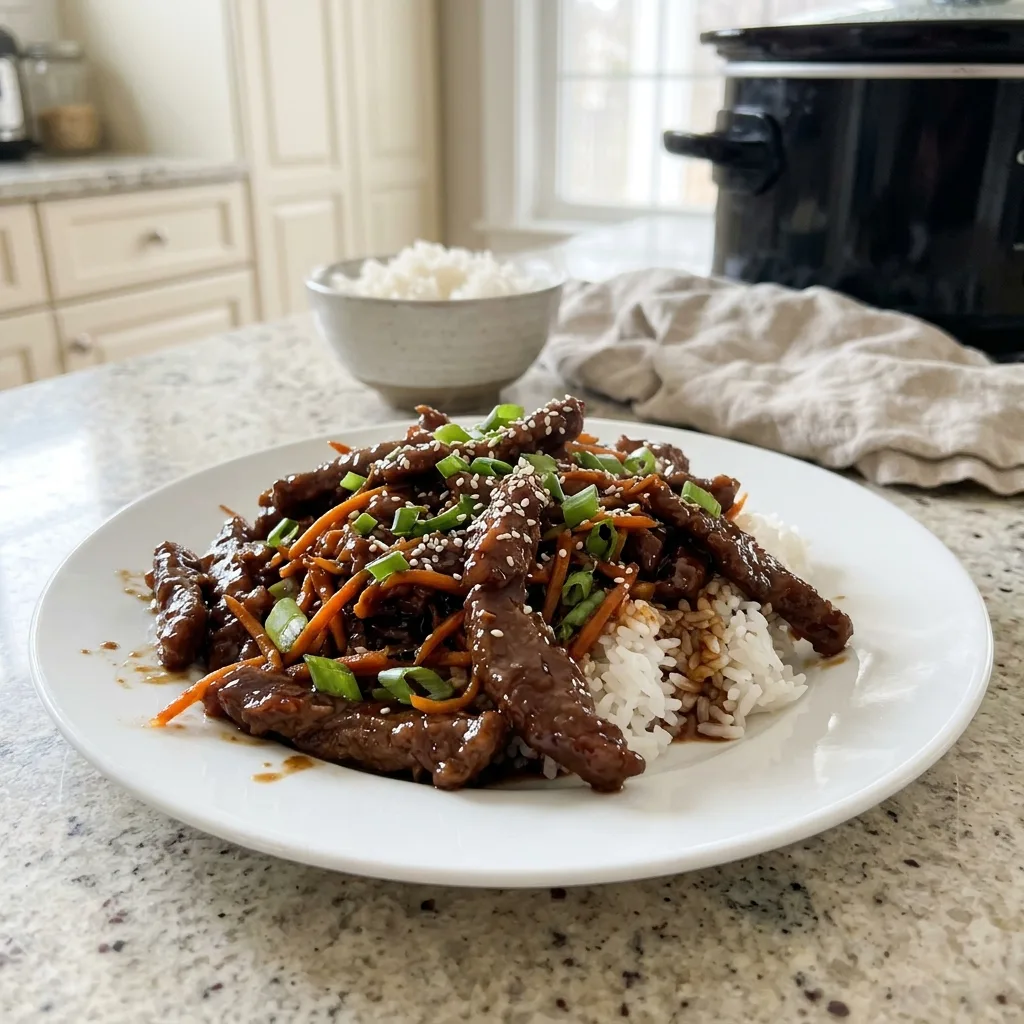
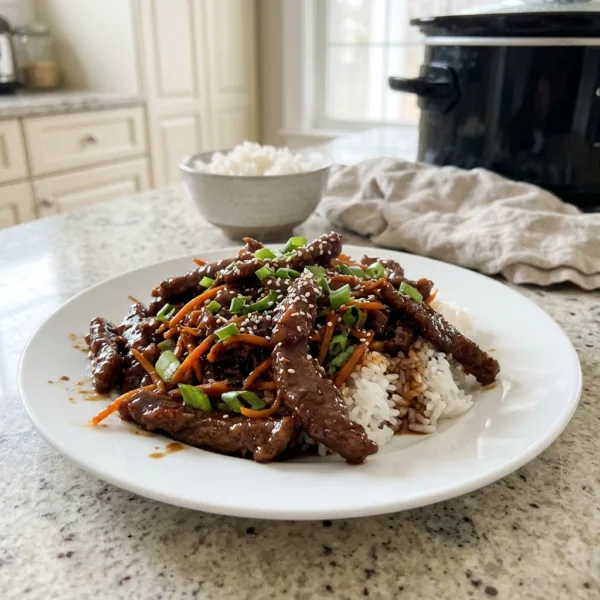
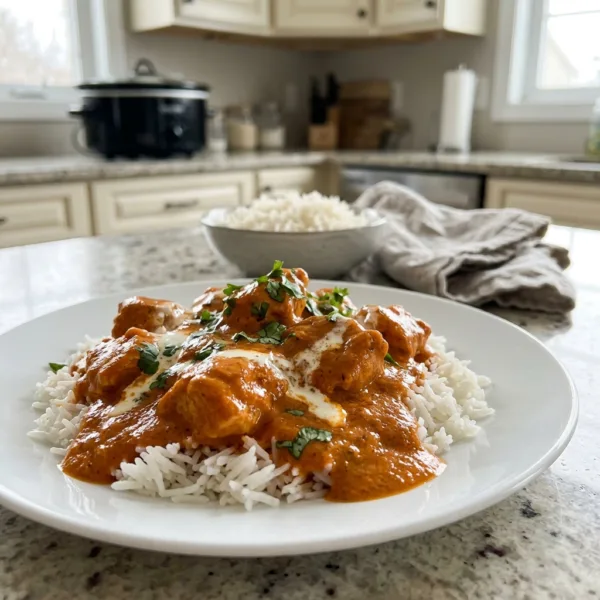
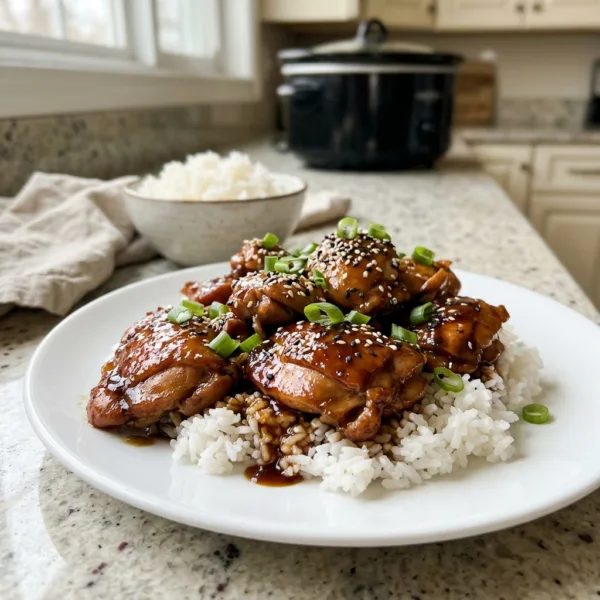
Thin strips of flank steak simmer in a glossy sauce of soy sauce, brown sugar, garlic and ginger until fork tender, then finish with green onions for a sticky, takeout style dinner.
Prep15 min
Cook6 hr
Total6 hr 15 min
Serves6
LevelEasy
What makes it special
Flank steak
Soy sauce
Brown sugar
Green onions
If you love the sticky, savory beef from your favorite Chinese American restaurant but not the price or the wait, this slow cooker Mongolian beef is the answer. Thin strips of flank steak simmer in a glossy sauce of soy sauce, brown sugar, garlic and ginger until they are so tender they almost melt, and the sauce thickens into a sweet and salty glaze that clings to every piece.
The whole recipe takes about fifteen minutes of prep. There is no stir frying, no hot oil and no standing over the stove. You coat the beef in cornstarch, whisk the sauce, stir everything together and let the slow cooker do the work. When you come home, the kitchen smells like garlic and caramelized sugar, and all that is left is to stir in the green onions and spoon the beef over a mound of hot rice.
Why you will love this slow cooker Mongolian beef
Mongolian beef is a favorite for good reason, and the slow cooker makes it easier and more forgiving than the restaurant version. Here is what makes this recipe a keeper:
Fifteen minutes of prep. You slice the beef, toss it with cornstarch, whisk the sauce and stir. That is the whole job.
Fork tender beef. Low and slow cooking turns a lean cut into soft, juicy strips that fall apart at the touch of a fork.
A sauce that tastes like takeout. Soy sauce, brown sugar, garlic and ginger make a deep, sweet and savory glaze with just a little heat if you want it.
No frying and no mess. The cornstarch coating thickens the sauce right in the pot, so there is no hot oil to splatter.
Great for busy days. Start it in the morning and dinner is waiting when everyone comes home.
Budget friendly. Flank steak, pantry sauces and a bag of rice cost much less than a night of takeout and make enough for six.
What is Mongolian beef?
Despite the name, Mongolian beef is not a traditional dish from Mongolia. It is a Chinese American restaurant favorite that grew popular in the United States in the twentieth century. The classic version is made of thin slices of beef quickly fried and tossed in a sweet and savory brown sauce, usually with plenty of green onions, and served over rice or crispy noodles.
This slow cooker version keeps the flavors people love but changes the method. Instead of stir frying in a very hot wok, the beef cooks gently in the sauce, so it absorbs the garlic, ginger and brown sugar while it turns tender. The cornstarch coating on the meat melts into the cooking liquid and gives you a thick, shiny sauce without any extra steps.
The best cut of beef for Mongolian beef
Flank steak is the classic choice, and it works beautifully in the slow cooker. It is a lean cut with long, visible muscle fibers, and when it is sliced thinly against the grain it becomes tender and takes on the sauce very well. Look for a piece that is even in thickness so the strips cook at the same speed.
If you cannot find flank steak, skirt steak or sirloin are good substitutes. A well trimmed chuck roast also works, but it should be cut into thin strips and cooked a little longer. Whichever cut you choose, slicing against the grain is the most important step, because it shortens the fibers and keeps every bite soft.
Ingredients you will need
Everything in this recipe is easy to find at a regular grocery store. Here is what goes into the pot and why:
Flank steak: about two pounds, sliced thinly against the grain.
Cornstarch: coats the beef and thickens the sauce as it cooks.
Soy sauce: the salty base of the sauce. Low sodium soy sauce gives you better control over the salt.
Brown sugar: adds sweetness and a deep caramel flavor.
Garlic and fresh ginger: the aromatic heart of the sauce. Fresh is best here.
Water: loosens the sauce so the beef can simmer instead of dry out.
Shredded carrots: add a little natural sweetness and color.
Sesame oil: a small amount at the end adds a nutty restaurant style aroma.
Green onions: stirred in at the end for freshness and bite.
Rice: for serving. Steamed white rice is the classic partner.
Why you coat the beef in cornstarch
The thin layer of cornstarch on the beef does two jobs. First, it protects the strips from drying out during the long cook, so they stay juicy. Second, as it dissolves into the sauce it works as a thickener, turning the cooking liquid into a glossy glaze that coats the meat. This is why you do not need a separate cornstarch slurry at the end, although you can add one if you like a very thick sauce.
Toss the beef with the cornstarch right before it goes into the slow cooker so the coating stays dry and loose. If the strips sit in the cornstarch for a long time, they can turn gummy.
How to make slow cooker Mongolian beef, step by step
The method is simple, and every step has a purpose. Follow it in order and you will get tender meat and a sauce that shines.
Slice the beef. Cut the flank steak across the grain into strips about a quarter inch thick. Partly freezing the steak for twenty minutes makes it much easier to slice thinly.
Coat the beef. Place the strips in the slow cooker and toss them with the cornstarch until every piece is lightly covered.
Whisk the sauce. In a bowl, whisk the soy sauce, water, brown sugar, garlic and ginger until the sugar dissolves.
Combine. Pour the sauce over the beef, add the shredded carrots and stir so everything is coated.
Cook. Cover and cook on low for about six hours or on high for about three hours, until the beef is tender and the sauce has thickened.
Finish. Stir in the sesame oil and the sliced green onions and let the pot sit for five minutes.
Serve. Spoon the beef and sauce over hot rice and add sesame seeds if you like.
Tips for the best slow cooker Mongolian beef
Slice thinly and against the grain. This is the single biggest factor for tender beef. Look at the direction of the fibers and cut across them.
Do not skip the cornstarch. It protects the meat and thickens the sauce.
Use fresh garlic and ginger. Jarred versions work in a pinch, but fresh gives a brighter flavor.
Stir once halfway through if you can. This keeps the strips from clumping together, but do not open the lid more than needed.
Check the beef early. Every slow cooker runs a little differently, so test a piece near the end of the time range.
Add the green onions at the end. They stay fresh and bright instead of turning soft and gray.
Taste and adjust. Add a splash of water if the sauce is too salty or a pinch of brown sugar if you want it sweeter.
What to serve with Mongolian beef
Mongolian beef is rich and flavorful, so simple sides work best. A few ideas:
Steamed white rice: the classic base that soaks up the sauce.
Fried rice: for a heartier dinner, serve it alongside egg fried rice.
Steamed broccoli: its fresh green color and crisp bite balance the sweet sauce.
Stir fried green beans: quick, garlicky and a good contrast in texture.
Ramen or lo mein noodles: toss the noodles with a little sauce for a noodle bowl.
Cauliflower rice: a lighter option for anyone cutting back on carbs.
Variations to try
Spicy Mongolian beef: add a teaspoon of red pepper flakes or a spoonful of chili garlic sauce to the sauce.
Add vegetables: stir in broccoli florets or sliced bell pepper for the last thirty minutes.
Use chicken: swap the beef for thinly sliced chicken thighs and cook on low for about four hours.
Add hoisin: a tablespoon of hoisin sauce gives the glaze a deeper, slightly fruity flavor.
Make it sweeter: add a spoonful of honey for a stickier finish.
Use coconut aminos: swap the soy sauce for coconut aminos for a gluten free and soy free version.
How to fix a sauce that is too thin or too thick
If your sauce is thinner than you like, whisk one tablespoon of cornstarch with two tablespoons of cold water until smooth, stir it into the pot, turn the heat to high and cook with the lid off for about ten minutes. The sauce will thicken and turn glossy.
If the sauce is too thick or too salty, stir in a few tablespoons of warm water until it loosens. Taste it again and add a little brown sugar if the flavor needs balancing.
Storage, reheating and freezing
Leftover Mongolian beef keeps very well, and many people think it tastes even better the next day. Here is how to store it:
Refrigerator: keep the beef and sauce in an airtight container for up to four days.
Freezer: freeze the cooled beef with its sauce for up to three months. Thaw it overnight in the refrigerator.
Reheating: warm it in a pan or the microwave with a splash of water so the sauce loosens and the beef stays tender.
Meal prep: divide the beef and rice into containers for easy lunches during the week.
Frequently asked questions
Can I use stew meat? Stew meat is cut for long cooking, but the pieces are large and thick. For the best texture, slice it thinner or use flank steak.
Can I cook it on high? Yes. Cook it on high for about three hours, but check at the two and a half hour mark, because lean beef can turn dry if it cooks too long.
Why is my beef tough? Most often the beef was sliced with the grain instead of against it, or it was overcooked. Slice across the fibers and check early.
Can I make it ahead? Absolutely. It reheats well and is a great choice for meal prep.
Is it gluten free? Regular soy sauce contains wheat. Use tamari or coconut aminos to make it gluten free.
Can I double the recipe? Yes, if your slow cooker is large enough. Keep the pot no more than two thirds full and add about thirty minutes to the cook time.
A quick guide to the flavors
The taste of Mongolian beef comes from a careful balance. Soy sauce brings salt and a deep savory flavor. Brown sugar adds sweetness and a caramel note that rounds off the salt. Garlic and ginger give the sauce its warm, aromatic character, and the little splash of sesame oil at the end adds a toasted, nutty finish.
If you taste the sauce and it seems flat, it usually needs a touch more of one of these. A pinch of brown sugar sharpens the sweetness, a splash of soy sauce adds depth, and a squeeze of lime or a drop of rice vinegar adds brightness.
Make it a weeknight habit
Because the prep is so quick, this recipe is perfect for a busy week. You can slice the beef and whisk the sauce the night before and keep them in separate containers in the refrigerator. In the morning, tip everything into the slow cooker, switch it on and head out the door.
A little planning goes a long way. Cook a big pot of rice on Sunday, and you will have the base for several meals. Add a bag of frozen stir fry vegetables on the side, and dinner is ready in minutes.
Budget and shopping notes
Flank steak is a little more expensive than other cuts, but a pound and a half to two pounds feeds six people when it is served over rice, so the cost per serving stays low. Look for it on sale and freeze it in the portion you need. A partly frozen steak is also easier to slice.
Pantry items like soy sauce, brown sugar and cornstarch last a long time and are used in many other recipes, so you will get more than one meal out of them. Fresh ginger freezes well, and you can grate it straight from the freezer.
Common mistakes to avoid
Slicing with the grain. This makes the beef chewy. Always slice across the fibers.
Cutting the strips too thick. Thick strips take longer to soften and can stay tough in the center.
Leaving out the cornstarch. The sauce will stay thin and the beef may dry out.
Overcooking. Lean flank steak turns dry if it cooks too long, so check early.
Using too much soy sauce. The sauce reduces as it cooks, so measure carefully and use low sodium if you can.
Adding the green onions too early. They should go in at the end to stay fresh.
A closer look at the ginger and garlic
Fresh ginger and garlic are what make this sauce taste alive. Ginger adds a warm, slightly peppery brightness, and garlic adds a savory depth that mellows as it cooks. Grating them on a fine grater or a microplane spreads their flavor evenly through the sauce, so you do not bite into a big piece.
If you do not have fresh ginger, use half a teaspoon of ground ginger, but the flavor will be a little flatter. Peeling ginger is easy with the edge of a spoon, which scrapes off the thin skin without wasting any of the flesh.
Timing guide for different slow cookers
Slow cookers vary a lot, and an older model may run cooler than a new one. As a general guide:
Low setting: about six hours for tender beef.
High setting: about three hours for tender beef.
Large, new slow cookers: may cook faster, so start checking about thirty minutes early.
Small slow cookers: the beef is deeper in the pot, so it may need a little more time.
Warm setting: once the beef is tender, switch to warm and it will hold for up to an hour without drying out.
Make it lighter or richer
For a lighter version, use low sodium soy sauce, reduce the brown sugar by a quarter and serve the beef over cauliflower rice or with steamed vegetables. The beef itself is lean, so the dish is already a good source of protein.
For a richer version, add a tablespoon of hoisin sauce and a drizzle of honey, and serve it over buttery rice or crispy noodles. A sprinkle of toasted sesame seeds and a handful of extra green onions make it look as good as it tastes.
Turn the leftovers into new meals
Leftover Mongolian beef is a gift for the next day. Here are a few ideas:
Rice bowls: layer rice, beef, cucumber and shredded carrots for an easy lunch.
Fried rice: chop the beef and stir it into hot rice with egg, peas and a splash of soy sauce.
Lettuce wraps: spoon the beef into crisp lettuce leaves and top with green onion.
Beef quesadillas: fold the beef with cheese in a tortilla for a fun fusion snack.
Noodle bowls: toss cooked noodles with the beef and sauce and top with sesame seeds.
Final thoughts
Slow cooker Mongolian beef proves that a favorite takeout dish can be made at home with very little work. The sauce is glossy and balanced, the beef is tender and the green onions keep every spoonful fresh and bright.
Make it once and it may become part of your regular rotation. It is quick to prepare, easy on the budget and loved by almost everyone at the table. Serve it over a mound of hot rice, sprinkle on a few sesame seeds and enjoy a dinner that tastes like a night out, made right in your own kitchen.
Easy slow cooker Mongolian beef with tender flank steak in a sweet and savory garlic ginger sauce. Only 15 minutes of prep and it serves 6 over rice.
Beef Easy Chinese American
Prep
15 min
Cook
6 hr
Total
6 hr 15 min
Servings
6
Ingredients 14 items
Tap to check off as you go
For the beef and sauce
For finishing
To serve
Instructions 7 steps
1
Slice the beef
Slice the flank steak across the grain into strips about 1/4 inch thick.
2
Coat the beef
Place the beef in the slow cooker and toss with the cornstarch until every strip is lightly coated.
3
Make the sauce
In a bowl, whisk the soy sauce, water, brown sugar, garlic, ginger and pepper until the sugar dissolves.
4
Combine
Pour the sauce over the beef, add the shredded carrots and stir so everything is coated.
5
Cook
Cover and cook on LOW for 6 hours or on HIGH for about 3 hours, until the beef is tender and the sauce has thickened.
6
Finish
Stir in the sesame oil and green onions and let the pot stand for 5 minutes.
7
Serve
Spoon over hot rice and top with sesame seeds and extra green onion.
Nutrition per serving
Calories
410
Protein
33g
Carbs
45g
Fat
10g
Sugar
28g
Fiber
1g
Sodium
1050mg
Questions, answered
Can I use stew meat?
Stew meat works if you slice the pieces thinner. Flank steak gives the best texture.
Can I make it gluten free?
Yes. Use tamari or coconut aminos instead of soy sauce.
Why is my beef tough?
It was likely sliced with the grain or cooked too long. Slice across the fibers and check early.
How do I store leftovers?
Keep in an airtight container in the refrigerator for up to 4 days and reheat with a splash of water.
Recipe by
Denise
Home cook, baker and serial recipe tweaker. I share the dishes my family asks for most, written step by step so they turn out right in your kitchen too.