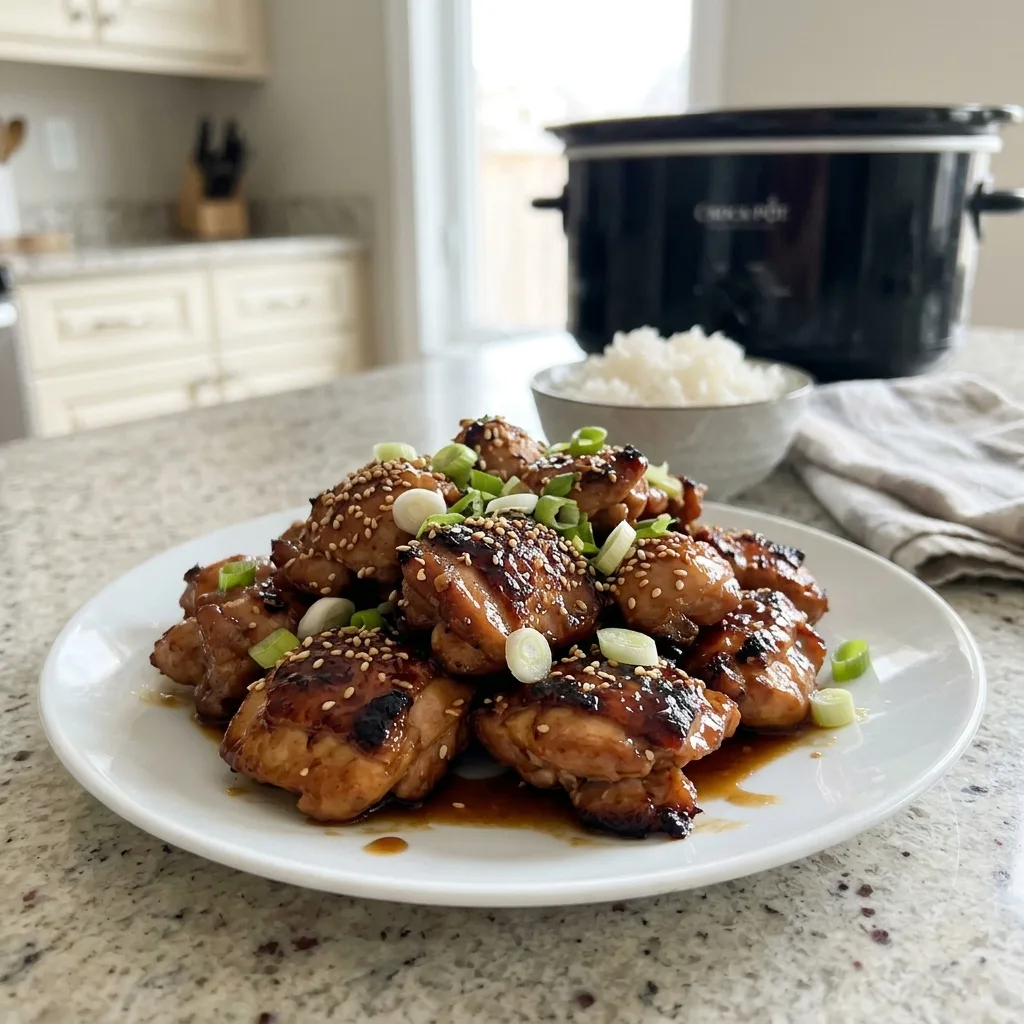
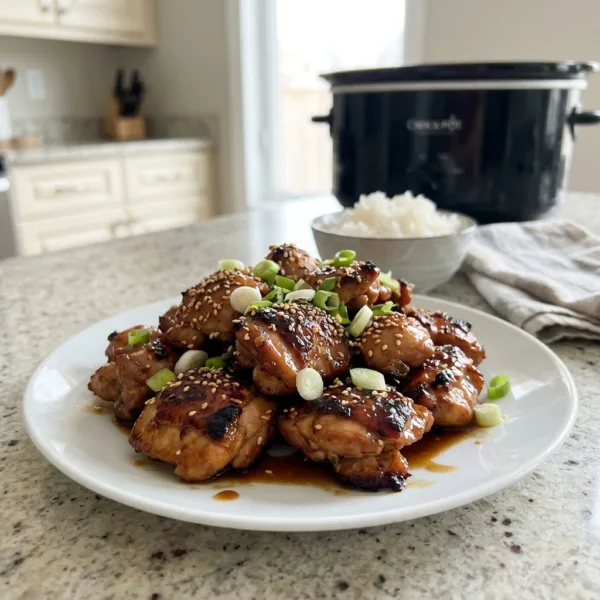
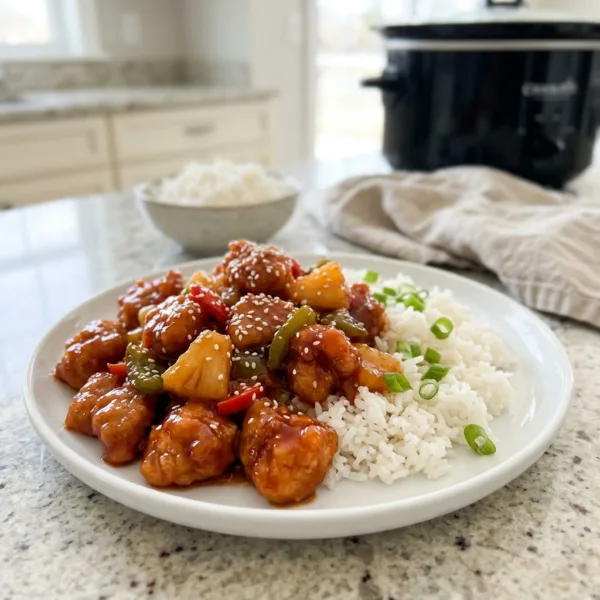
Juicy chicken thighs in a sticky homemade teriyaki glaze that cooks itself in the slow cooker.
Prep10 min
Cook4 hr
Total4 hr 10 min
Serves6
LevelEasy
What makes it special
Chicken thighs
Honey
Garlic
Soy sauce
This slow cooker teriyaki chicken is the easy dinner you can start in the morning and forget about until the house smells amazing. Boneless chicken thighs cook slowly in a sauce of soy sauce, honey, brown sugar, garlic, ginger and rice vinegar until they are tender enough to shred with a spoon. A quick cornstarch slurry at the end turns the juices into a thick, glossy glaze that clings to every piece, so each bite tastes like your favorite takeout order without the delivery fee or the wait.
I make this recipe on busy weekdays when I know the evening is going to be chaotic. It takes about ten minutes to get everything into the pot, and after that the slow cooker does all the work. There is no browning, no stirring over a hot stove and no babysitting. When dinner time comes around, you only have to thicken the sauce, cook some rice and call everyone to the table.
Why you will love this recipe
There are plenty of teriyaki chicken recipes out there, so it is fair to ask what makes this one worth your time. Here is what I like most about it, after making it many times.
Ten minutes of prep. You whisk a sauce, pour it over the chicken and press start. That is the whole active effort.
Pantry friendly. Soy sauce, honey, brown sugar, garlic, ginger and rice vinegar are ingredients many kitchens already have. The only fresh items are the garlic and ginger, plus scallions for serving.
Forgiving timing. Chicken thighs stay juicy even if dinner runs late, which is not true of lean chicken breasts.
A real glaze, not a watery sauce. Many slow cooker recipes end up with thin liquid at the bottom of the pot. The cornstarch step at the end fixes that and gives you a sticky, shiny coating.
Feeds a crowd. The recipe serves six, and the leftovers are even better the next day in lunch bowls.
What is teriyaki, exactly?
The word teriyaki comes from Japanese cooking. “Teri” refers to the shine that sugar gives to a glaze, and “yaki” means grilled or broiled. Traditional teriyaki is a simple mix of soy sauce, mirin and sugar that is brushed on fish or meat as it cooks. The American version that most of us know from restaurants and food courts is usually thicker and sweeter, and it often includes garlic and ginger.
This recipe leans toward that familiar American style. The honey and brown sugar give sweetness and shine, the soy sauce gives salt and depth, the rice vinegar adds a gentle tang, and the garlic and ginger bring warmth. Because there is no mirin in the ingredient list, rice vinegar and a little extra sugar do the job of balancing the saltiness. If you happen to have mirin, you can swap a tablespoon or two for some of the honey, but it is not needed.
Ingredients and smart substitutions
A short ingredient list means each item matters, so here is what each one does and what you can use instead if you need to.
Boneless skinless chicken thighs
Thighs are the best cut for the slow cooker. They contain a bit more fat and connective tissue than breasts, which means they stay moist and tender through hours of gentle heat. This recipe uses two pounds, or about 900 grams, which is usually six to eight thighs depending on their size. Trim off any large pieces of excess fat before you start, because fat will melt into the sauce and can make the glaze greasy.
You can use chicken breasts if that is what you have. They are leaner and cook faster, so keep a close eye on them and plan for less time. More on that in the timing section below.
Low sodium soy sauce
Soy sauce is the backbone of the sauce, and the sauce reduces and concentrates as it cooks. That is why I recommend low sodium soy sauce. Regular soy sauce can make the final dish too salty, especially after the glaze thickens. If you only have regular soy sauce, use the same amount but add a splash of water, or reduce the soy sauce by a tablespoon and taste the sauce before serving.
For a gluten free version, use tamari or a soy sauce that is clearly labeled gluten free. Tamari has a slightly deeper, rounder flavor, and it works very well here. Always check the label of every ingredient if you are cooking for someone with a gluten allergy or celiac disease, including the cornstarch and the rice vinegar.
Honey and brown sugar
Together these two sweeteners give the sauce its sticky, glossy texture. Honey brings floral sweetness and helps the glaze cling to the chicken. Brown sugar adds a deeper, caramel like flavor. If you are out of honey, maple syrup is a good one to one replacement. If you are out of brown sugar, white sugar works, although you will lose a little of that molasses note.
If you want a less sweet dish, you can cut the brown sugar to two tablespoons. Keep the honey as written, because it is doing a lot of the work for the texture of the glaze.
Garlic and fresh ginger
Fresh garlic and fresh ginger give this sauce its real, restaurant style flavor. Four cloves of garlic may sound like a lot, but slow cooking mellows the sharpness and leaves a warm, savory taste. A tablespoon of grated ginger adds brightness and a gentle heat. A trick that saves time is to keep a knob of ginger in the freezer and grate it straight from frozen, skin and all. It grates easily and you never have to worry about it going bad.
In a pinch, you can use jarred minced garlic and ground ginger. Use about one teaspoon of ground ginger in place of the fresh, and expect a slightly flatter flavor.
Rice vinegar
Two tablespoons of rice vinegar may seem small, but it makes a big difference. Sweet and salty sauces can taste heavy without something acidic to lift them, and the vinegar does that. If you do not have rice vinegar, apple cider vinegar or white wine vinegar can stand in. Lime juice also works well, and it adds a fresh note that goes nicely with the ginger.
Cornstarch slurry
The mix of one tablespoon of cornstarch and two tablespoons of cold water is what turns the thin cooking liquid into a proper glaze. Always mix the cornstarch with cold water first. If you add dry cornstarch straight to a hot sauce, it will clump and you will end up with small lumps that never fully dissolve. If you are avoiding cornstarch, arrowroot powder works in the same amount, although it should be added at the very end and not boiled for long.
Equipment you need
This recipe works in any standard slow cooker with a capacity between five and seven quarts. I use a six quart model. A cooker that is too large will spread the chicken too thin, and the sauce can reduce and scorch around the edges. A cooker that is too small will pile the chicken high, which means uneven cooking.
Other helpful tools include a medium bowl for whisking the sauce, a microplane or fine grater for the ginger and garlic, a small bowl for the cornstarch slurry, and two forks or tongs for turning and shredding the chicken. A slow cooker liner is optional but makes cleanup much easier, because sugary sauces can stick to the sides of the pot.
How to make slow cooker teriyaki chicken, step by step
The full recipe card is below, but here is a walkthrough with the small details that help the dish turn out well every time.
Step 1: Add the chicken to the slow cooker
Lay the chicken thighs in an even layer across the bottom of the slow cooker. A single layer is ideal, but if you need to stack them slightly, that is fine. Just make sure the pieces are not packed so tightly that the sauce cannot reach them. There is no need to season the chicken first, because the sauce is flavorful enough to do all the seasoning.
Step 2: Whisk the sauce
In a medium bowl, whisk together the soy sauce, honey, brown sugar, garlic, ginger and rice vinegar. Keep whisking until the honey and sugar have mostly dissolved and the mixture looks smooth. This takes about a minute. Doing it in a separate bowl, rather than pouring everything into the cooker, helps the sweeteners blend evenly so you do not end up with pockets of sugar or honey on the bottom.
Step 3: Pour and coat
Pour the sauce over the chicken and use tongs to turn each piece so it is coated on all sides. The sauce will not fully cover the chicken, and that is fine. The thighs release their own juices as they cook, which thins the sauce and helps it surround the meat.
Step 4: Cook low and slow
Cover the slow cooker and cook on LOW for four to five hours, or on HIGH for two to three hours. The chicken is done when it is very tender and a fork pulls it apart with no resistance. For food safety, the thickest part of the chicken should reach at least 165 degrees Fahrenheit, which is 74 degrees Celsius. With thighs cooked this long, the temperature will be well past that point.
Try not to lift the lid while the chicken cooks. Every time you open it, heat escapes and the cooking time stretches by fifteen to twenty minutes.
Step 5: Thicken the glaze
When the chicken is tender, stir the cornstarch and water together again, because the cornstarch settles quickly. Pour it into the slow cooker and gently stir it through the sauce. Replace the lid, turn the cooker to HIGH, and cook for fifteen minutes. The sauce will thicken and become shiny. At this point you can leave the chicken in whole pieces, or shred it with two forks and stir it back into the glaze so every strand is coated.
Step 6: Serve
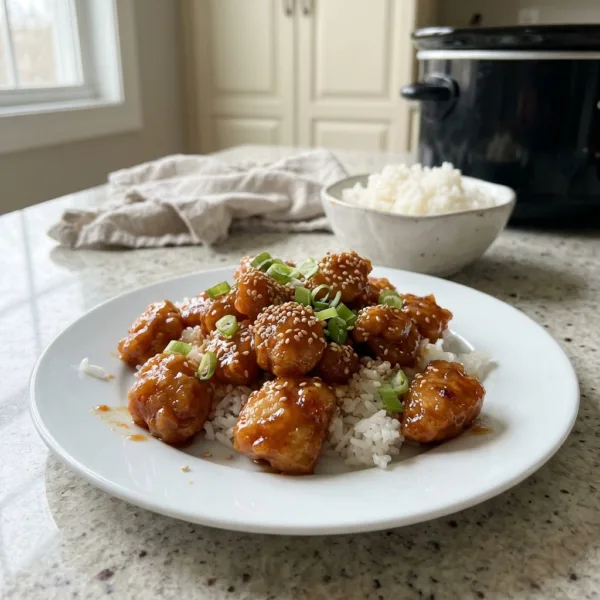
Scoop the chicken and sauce over hot steamed rice. Finish with a sprinkle of sesame seeds and thinly sliced scallions. The fresh onion and the toasted seeds add a bit of crunch and freshness that make the whole plate feel complete.
Cooking time guide: low, high and different cuts
Every slow cooker runs a little differently. Older models often run cooler, while newer ones can run hotter, so the times below are a starting point and not a strict rule.
Boneless skinless thighs on LOW: four to five hours. This is my preferred method because the meat turns very tender.
Boneless skinless thighs on HIGH: two to three hours. Good when you start late in the day.
Boneless skinless breasts on LOW: three to four hours. Check them early, and pull them out as soon as they shred easily.
Boneless skinless breasts on HIGH: one and a half to two and a half hours.
Bone in thighs or drumsticks: add about an hour to the low setting. They are very forgiving, and the bones add flavor to the sauce.
If you are unsure, check the chicken at the lower end of the range. It is much easier to cook it a little longer than to rescue dry meat.
How to fix the sauce if it is too thin or too thick
Sauce consistency can vary depending on how much liquid the chicken releases and how tightly your slow cooker seals. Luckily, both problems are easy to fix.
If the sauce is too thin: Remove the lid and cook on HIGH for ten more minutes, which lets some steam escape and the sauce reduce. If it is still thin, whisk one more teaspoon of cornstarch with a tablespoon of cold water and stir it in. Give it another five minutes.
If the sauce is too thick: Stir in a splash of warm water or chicken broth, a tablespoon at a time, until it loosens to the texture you like. The sauce will also thicken as it cools, so a slightly looser sauce in the pot is often just right by the time it reaches the plate.
If the sauce tastes too salty: Add a teaspoon of honey and a squeeze of lime or a splash of rice vinegar. A little extra rice or a handful of steamed vegetables on the side also balances saltiness nicely.
Easy variations
Once you have the base recipe down, it is simple to change it to fit your mood or what is in the fridge.
Pineapple teriyaki chicken. Stir in one cup of pineapple chunks, drained, during the last thirty minutes. The fruit adds sweetness and a tropical twist.
Spicy teriyaki chicken. Add one to two teaspoons of sriracha or a pinch of red pepper flakes to the sauce. A spoonful of chili garlic sauce also works.
Orange teriyaki chicken. Replace two tablespoons of the soy sauce with fresh orange juice and add a teaspoon of orange zest.
Sesame teriyaki chicken. Stir one teaspoon of toasted sesame oil into the finished sauce for a nutty aroma. Add it at the end, because heat can dull its flavor.
Veggie loaded teriyaki. Add broccoli florets, sliced bell peppers or snap peas during the last twenty to thirty minutes so they stay crisp tender rather than mushy.
Lower sugar teriyaki. Reduce the brown sugar to two tablespoons and the honey to a quarter cup. The sauce will be a little less sticky but still tasty.
What to serve with teriyaki chicken
Steamed white rice is the classic choice, and it is perfect for catching all that extra sauce. Jasmine rice and short grain sushi rice both work beautifully. For a heartier or higher fiber meal, try brown rice, quinoa or cauliflower rice.
For vegetables, roasted or steamed broccoli is a natural fit. Other great options include sauteed green beans, stir fried bok choy, cucumber salad with rice vinegar, sugar snap peas, or a simple side of shredded cabbage and carrots tossed with sesame dressing. If you like noodles, toss the shredded chicken and sauce with cooked lo mein or soba noodles for a quick one pot style dinner.
Here are a few ways to turn the leftovers into entirely new meals:
Teriyaki chicken bowls. Layer rice, chicken, shredded carrots, edamame and sliced avocado for a colorful lunch.
Teriyaki chicken sliders. Pile the shredded chicken on small soft rolls with a bit of slaw.
Teriyaki fried rice. Chop the chicken and stir fry it with leftover rice, eggs and frozen peas.
Teriyaki chicken wraps. Roll the chicken in a tortilla with lettuce, cucumber and a drizzle of the sauce.
Teriyaki chicken tacos. Serve in warm tortillas with pineapple salsa and a squeeze of lime.
Make ahead, storage and freezing
Refrigerator: Let the chicken cool, then store it with the sauce in an airtight container in the fridge for up to four days. The flavors keep developing, so the leftovers often taste even better the next day.
Freezer: This recipe freezes well. Cool the chicken completely, then transfer it with its sauce to a freezer safe container or bag. Press out the extra air, label it with the date and freeze for up to three months. Thaw overnight in the refrigerator before reheating.
Reheating: Warm the chicken gently in a covered saucepan over medium low heat, or in the microwave in thirty second bursts, stirring in between. Add a splash of water or broth if the sauce has thickened too much in the fridge.
Prep ahead: You can whisk the sauce a day in advance and keep it covered in the refrigerator. You can also place the raw chicken in a freezer bag with the sauce and freeze it as a dump and go meal. Thaw it fully in the fridge before cooking so the chicken heats evenly and safely.
Common mistakes to avoid
Adding the cornstarch at the start. It will break down over the long cooking time and lose its thickening power. Always add it at the end.
Using frozen chicken. Frozen chicken takes too long to reach a safe temperature in a slow cooker. Thaw it first in the refrigerator.
Overcooking breasts. Lean chicken turns dry and stringy when cooked too long. Check early, or choose thighs for more forgiveness.
Skipping the whisk. If the sauce is not blended before it goes in, the honey and sugar can sink and scorch.
Using regular soy sauce without adjusting. The sauce concentrates as it cooks, so the final dish can end up too salty.
Opening the lid too often. Each peek adds cooking time and cools the pot.
A note on nutrition
Each serving of this recipe has roughly 390 calories and 34 grams of protein, which makes it a satisfying and filling main dish. Teriyaki sauces are naturally high in sodium and sugar, so if you are watching either one, use low sodium soy sauce, reduce the brown sugar and serve the chicken with plenty of vegetables. The nutrition figures on the recipe card are estimates per serving and do not include rice, so adjust based on what you serve with it.
Frequently asked questions
Can I make this in an Instant Pot? Yes. Use the same ingredients, but cut the amount of soy sauce by a quarter and add a quarter cup of water. Cook on high pressure for ten minutes, let the pressure release naturally for five minutes, then thicken the sauce using the saute function.
Can I cook it in the oven instead? You can bake the chicken and sauce in a covered dish at 350 degrees Fahrenheit, which is 175 degrees Celsius, for about 35 to 45 minutes, then thicken the sauce on the stove.
Why did my sauce turn watery? Chicken releases liquid as it cooks, and slow cookers trap steam. The cornstarch step at the end solves this, and you can cook it uncovered for a few minutes to reduce it further.
Can I double the recipe? Yes, if your slow cooker is large enough. Use an eight quart model, keep the chicken in a thick layer and add an extra thirty minutes to the cooking time if needed.
Final thoughts
If you are looking for a dinner that feels special but asks almost nothing of you, this slow cooker teriyaki chicken is a great one to keep in your rotation. It is easy enough for a beginner, flexible enough for endless variations, and delicious enough that people will ask for the recipe. Make a big pot, fill a few lunch containers for the week, and enjoy a little extra time back in your day.
If you try it, I would love to hear how it turned out. Leave a comment with your favorite way to serve it, and share it with a friend who loves easy weeknight dinners.
Tender slow cooker teriyaki chicken in a sweet and savory homemade glaze. Serves 6 with 10 minutes of prep.
Chicken Easy Asian-American
Prep
10 min
Cook
4 hr
Total
4 hr 10 min
Servings
6
Ingredients 11 items
Tap to check off as you go
For the chicken
For the sauce
To serve
Instructions 6 steps
1
Add the chicken
Place the chicken thighs in an even layer in a 6 quart slow cooker.
2
Mix the sauce
Whisk the soy sauce, honey, brown sugar, garlic, ginger and rice vinegar in a bowl until smooth.
3
Pour over
Pour the sauce over the chicken and turn the pieces to coat.
4
Cook low and slow
Cover and cook on LOW for 4 to 5 hours or on HIGH for 2 to 3 hours, until the chicken is tender and shreds easily.
5
Thicken the glaze
Stir in the cornstarch mixture, cover and cook on HIGH for 15 minutes until the sauce turns thick and glossy.
6
Serve
Sprinkle with sesame seeds and scallions and serve over rice.
Nutrition per serving
Calories
390
Protein
34g
Carbs
28g
Fat
16g
Sugar
22g
Fiber
0g
Sodium
1050mg
Questions, answered
Can I use chicken breasts?
Yes. Cook on LOW for 3 to 4 hours so they do not dry out.
Can I use frozen chicken?
Thaw it first for safe, even cooking.
Can I shred the chicken?
Yes. Shred it with two forks and stir it back into the sauce.
How do I store leftovers?
Keep in an airtight container in the fridge up to 4 days and reheat gently.
Recipe by
Denise
Home cook, baker and serial recipe tweaker. I share the dishes my family asks for most, written step by step so they turn out right in your kitchen too.